

How Industrial Curtains Improve Safety and Workflow in Active Facilities
Industrial environments are constantly in motion. Equipment is running, people are moving, materials are being handled, and multiple processes often happen side by side. In facilities such as manufacturing plants, fabrication shops, warehouses, and service bays, maintaining safety and efficiency simultaneously can be challenging.
That’s where industrial curtain systems play a much larger role than many people expec
Rather than acting as simple dividers, well-designed industrial curtains help facilities control risk, organize workflow, and create safer, more productive work environments — without the rigidity of permanent walls.
Creating Defined Work Zones Without Permanent Construction
One of the most common challenges in industrial facilities is managing different processes in the same open space. Welding, grinding, painting, assembly, and mechanical work often need separation, but building permanent walls isn’t always practical.
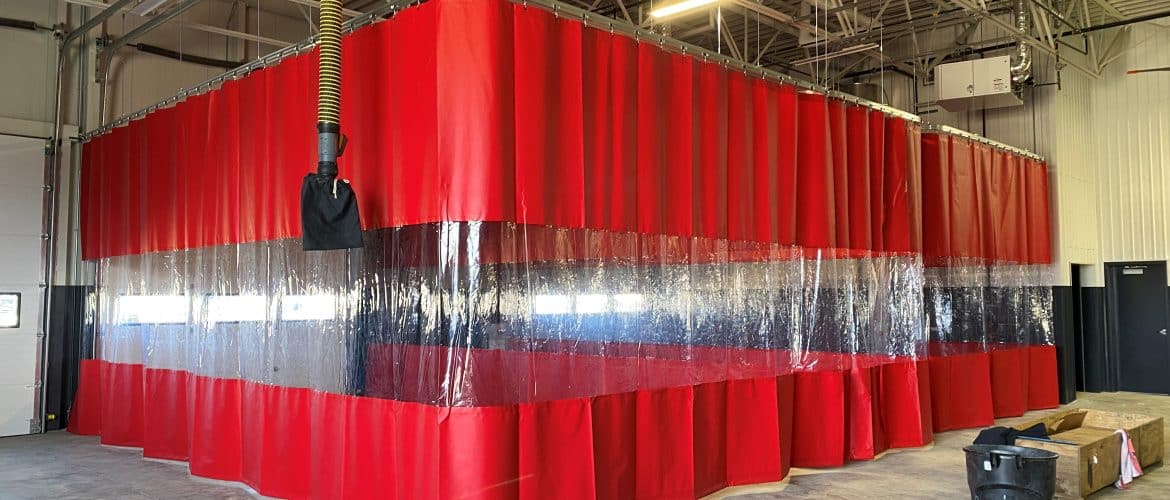
Industrial curtains allow facilities to create clearly defined work zones while keeping the space adaptable. Curtains can be opened or closed as needed, giving teams flexibility without disrupting operations or committing to fixed layouts.
This is especially valuable in facilities that evolve or need to accommodate changing production demands.
Improving Workplace Safety
Safety is a top priority in any industrial environment. Sparks, dust, overspray, fumes, and debris can pose risks not only to the people doing the work, but also to others nearby.
Industrial curtain systems help improve safety by:
-
-
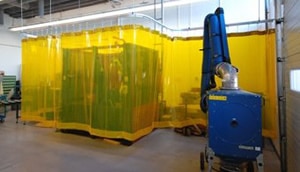
containing sparks and welding flash
-
limiting the spread of dust and debris
-
separating hazardous processes from general work areas
-
improving visibility and awareness within designated zones
-
By clearly separating tasks, facilities can reduce the likelihood of accidents and ensure workers are operating in controlled environments.
Supporting Efficient Workflow
When workspaces are poorly defined, productivity often suffers. Teams may need to stop work, relocate equipment, or wait for other tasks to finish before proceeding.
Industrial curtains help streamline workflow by allowing multiple operations to happen at the same time — safely and independently. This reduces downtime, improves scheduling, and allows facilities to make better use of both space and labour.
In high-demand environments, even small efficiency gains can have a meaningful impact on daily operations.
Reducing Noise and Disruptions
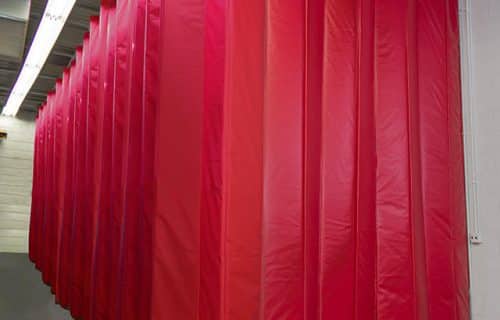
Noise is another often overlooked issue in industrial settings. While curtains aren’t a replacement for full acoustic systems, certain industrial curtain materials can help reduce noise transfer between work areas.
This can make communication easier, improve focus, and create a more manageable working environment — particularly in facilities where several processes are running simultaneously.
Designed to Work With the Facility, Not Against It
Every industrial space is different. Ceiling heights vary. Structural elements get in the way. Equipment layouts change.
Custom industrial curtain systems are designed to work around these realities. Track layouts, curtain materials, and configurations are all selected to suit the facility’s specific needs — whether that’s a full enclosure, a partial divider, or a movable barrier system.
The result is a solution that fits naturally into the space and supports operations rather than restricting them.
A Practical, Long-Term Solution
Industrial curtains are durable, easy to maintain, and built for daily use in demanding environments. They offer a practical alternative to permanent construction while delivering real benefits in safety, organization, and efficiency.
For facilities looking to improve workflow, manage risk, or adapt to changing operational needs, industrial curtain systems are often one of the most effective upgrades available.


